

Americas assault on Iran has exposed the limits of U.S. military power, drained its defences and strengthened the very forces Washington sought to weaken, writes DrBinoy Kampmark.
ON 10 MAY,Robert Kagan, the high priest of neoconservative thought, the bell-ringer for muscular interventionism and general American meddlesomeness, lamented inThe Atlanticthat the United States had suffered a unique defeat in its efforts to subjugate Iran.
The article says much about Kagans own identification with the obvious; some feat given the military fancy and fantasy that continues to blot the current Trump Administration.
Be that as it may, he finds the Iran war dishing out a defeat to the United States of unique quality, one that can neither be repaired nor ignored. No ultimate American triumph could emerge, and nothing would undo or overcome the harm done to return to the status quo ante. The Strait of Hormuz would not be open as it was prior to 28 February. Irans regional position, far from being blunted, had improved. China and Russia had been strengthened; the U.S. substantially diminished.
Kagan argues:
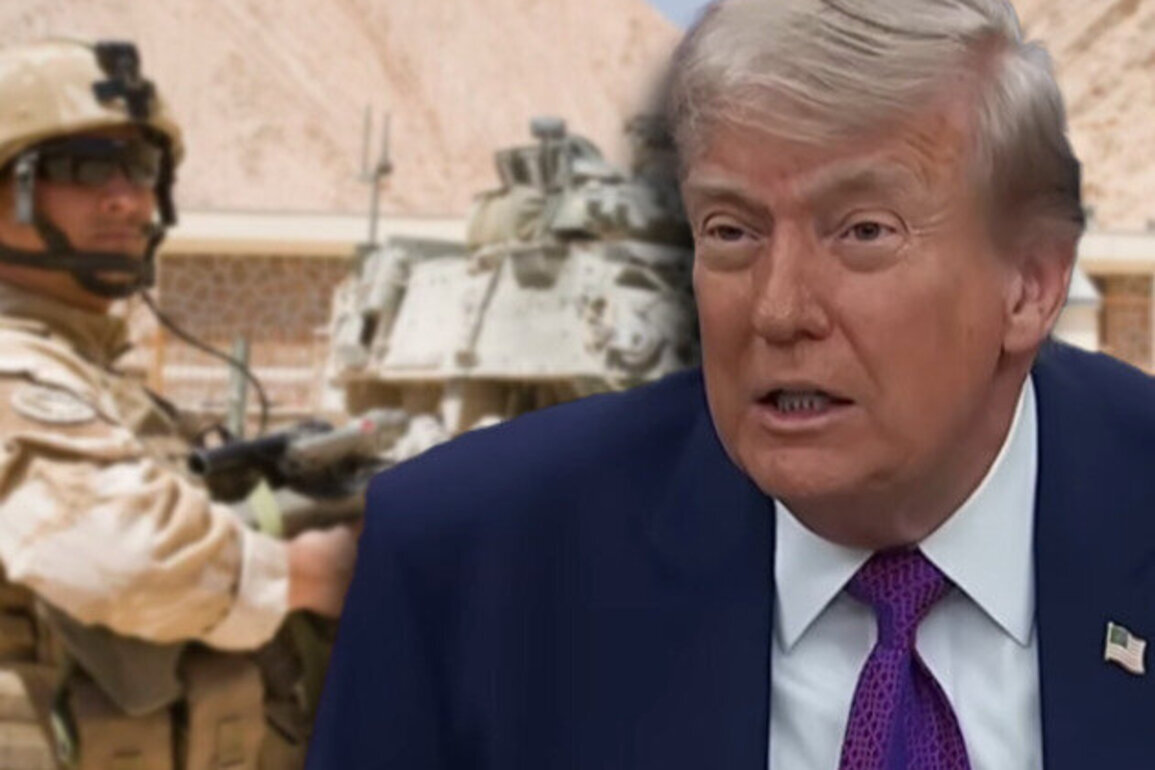
This prompting was undoubtedly due to theclaimmade by U.S. Secretary of StateMarco Rubioon 5 May in the White House Press Briefing Room thatOperation Epic Furyhad concluded, though U.S. President Donald Trump, ever keen to keep an iron in the fire,huffedthat Iran had to agree to give what has been agreed to. (The what is always the problem in Trumpland.)Not doing so would result in bombing at a much higher level and intensity than it was before.
The Iran nuclear lie and the warning signs Australia must not ignoreA striking Banksy, a recycled war lie and a drift toward exceptionalism reveal how easily truth is buried and how urgently Australia must choose to see before stepping over the edge.
The President had alsopausedProject Freedom, that massive prop of wishful thinking involving the use of the U.S. military to escort commercial shipping through the Strait of Hormuz. The pause effectively a breezy termination had been induced, in no small part, by the grumpiness of Saudi ArabiasMohammed bin Salman, worried that adventurism in the Strait would incite yet another round of Iranian attacks on Gulf states. To show his disapproval, the Crown Prince hadrefusedto permit the use of the Prince Sultan Airbase for U.S. operations.
Irans airstrikes had also shown far more bite than was initially reported, at least in the Western media stable. Some of this can be put down torestrictions on the releaseof satellite imagery supplied by commercial providersVantorandPlanet. Both have been compliant with the Pentagons request to either limit, delay or indefinitely withhold the publication of timely imagery covering the region. The Iranians, through state-affiliated news outlets, felt no such restraint.
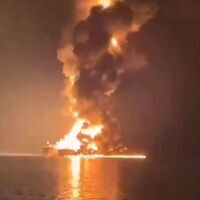
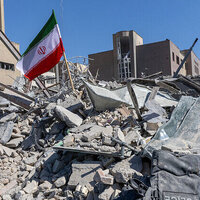
On 6 May,The Washington Post, after examining Iranian satellite imagery, reported that some 228 structures and pieces of equipment at U.S. military sites across the Middle East since 28 February had been damaged and destroyed. Hangars, barracks, fuel depots, aircraft, vital radar, communications and air defence equipment had been struck by Irans forces. The dangers posed by Iranian strikes had been so formidable as to force some U.S. bases in the region to relocate personnel out of missile range.
In its analysis, the paper claims to have verified some 109 images, aided by a comparison with lower-resolution imagery obtained from the European UnionsCopernicussatellite system, and any high-resolution images at hand from Planet.
The Iranian images also confirmed previously reported damage or destruction inflicted on several U.S. military assets:
- the radomes at Camp Arifjan and Ali al-Salem Air Base in Kuwait and at the 5th Fleet Headquarters;
- the Terminal High Altitude Area Defence (THAAD) missile defence radars and equipment located at Jordans Muwaffaq Salti Air Base and two sites in the United Arab Emirates;
- a second satellite communications site located at al-Udeid Air Base; and
- an E-3 Sentry command and control aircraft and a refuelling tanker at Prince Sultan Air Base in Saudi Arabia.
The analysts roped in to examine the images were impressed.
JEFF MCMULLEN: Trumps own goals in IranDonald Trumps biggest blunders will hinder any prospect of a lasting peace or real stability in the war-torn Middle East.
Mark Cancian, a former Marine Corps colonel and senior advisor to the Centre for Strategic and International Studies (CSIS),foundthe strikes to be precise:
William Goodhindof the open-access research projectContested Ground, in addition to noting the destruction of equipment, fuel storage and air base infrastructure, founddamageto soft targets, such as gyms, food halls and accommodation.
To add stinging insult to burgeoning injury, the defences used to cope with Iranian strikes proved staggeringly draining and disproportionately costly. The CSIS estimates the use of at least 190 THAAD interceptors and 1,060 Patriot interceptors between 28 February and 8 April, running down inventories of both at 53% and 43% respectively.
And just to improve the mood in Washington, Tehran, according to ananalysisby the U.S. intelligence community, retains roughly 75% of its pre-war inventories of mobile launchers and roughly 70% of its pre-war missile stockpile. Vague as they are, thats another objective of Operation Epic Fury dashed.
While the childish pantomime of non-diplomacy continues (Trumpragesthat the ceasefire with Tehran, given the latest piece of garbage of a counter proposal, is on life support), Washington is banking on a strangulation policy through yet another project of dubious merit: Economic Fury.
Secretary of the Treasury Scott Bessenttootedon 11 May:
Economic Fury, still in its swaddled infancy, also risks early retirement. Iranian stubbornness and stout resilience continue to trouble analysts in the intelligence community. A CIA analysiscirculated this monthconcluded that Tehran could withstand the U.S. naval blockade for between 90 and 120 days before experiencing dramatic economic deterioration.
Irans economy may be in a wretched state, but parochial determination has a certain staying power. Bureaucratic bickering, however, often finds its way, and a senior U.S. intelligence official (who could be anyone) has surfaced to counter the claims of the assessment. Genuine, extensive and rapid economic damage is being inflicted. The U.S. remains in the ascendant.
These varied intelligence assessments of decorative astrology cannot escape the dunderheaded reasoning that undergirded the war, along with the failure to appreciate the shocks caused, not merely by Irans closure of the Hormuz Strait but its systematic shredding of the U.S. security guarantee for Gulf states.
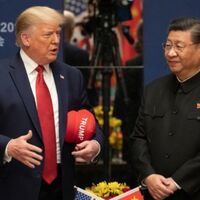
Unlike the fumbling, inventive antics shown prior to the invasion of Iraq in March 2003, the CIA and allied intelligence services were well aware that a campaign against Iran was freighted with terrible risk. Ensnared and trapped, Trump will find it hard to avoid using the good offices of Chinas PresidentXi Jinpingto lean on Beijings ally. If so, it is bound to come at an exacting price.
DrBinoy Kampmarkwas a Cambridge Scholar and is a lecturer atRMIT University. You can follow Dr Kampmark@BKampmark.
Related Articles
- The Iran nuclear lie and the warning signs Australia must not ignore
- Americas Iran war for oil signals environmental disaster
- Late 2026 far from now
- Oil, war and ecocide: The destruction of the Middle East
- Who's making money? The arsenal trade after Ukraine and Iran