

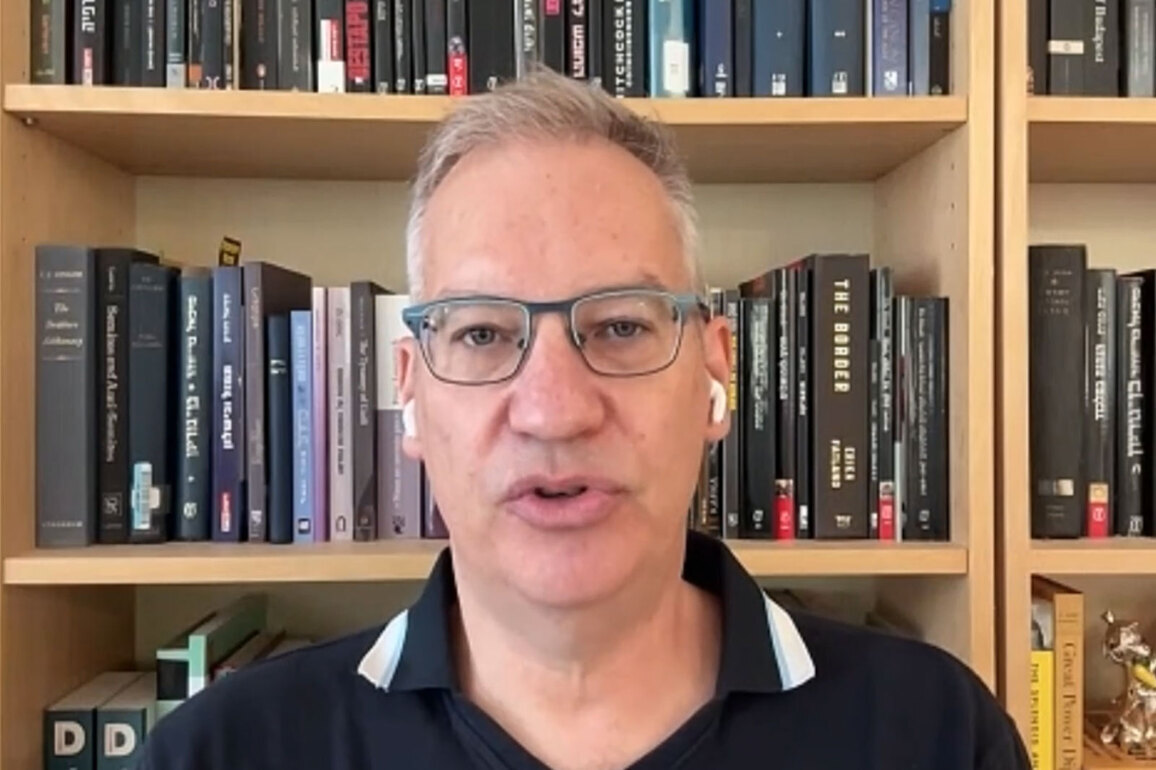
Tel Aviv [Israel], June 8 (ANI): As hostilities between Iran and Israel intensify, Adi Schwartz, Director of Research at the Misgav Institute, on Monday issued a stark warning regarding Iran's role in West Asia, describing the nation as a primary source of volatility and a persistent threat to global security.
Speaking with ANI, Schwartz rejected narratives that frame the current unrest as a mutual exchange of fire. He argued that recent military engagements are a direct result of unprovoked Iranian aggression.
Rejecting narratives that frame the current unrest as a mutual exchange of fire, Schwartz argued that recent military engagements are a direct result of unprovoked Iranian aggression. 'It's not exactly an exchange of shooting; Iran attacked Israel. So, Israel is responding to an Iranian unprovoked attack,' he told ANI.
Schwartz emphasised that the current crisis is not a sudden emergence, but rather the manifestation of a long-standing regional policy. He alleged that for nearly 50 years, Tehran has positioned itself as an adversary to most of its neighbours, utilising a network of proxies in Lebanon, Syria, Iraq, and Yemen to project power.
'The Middle East is not being pushed into a conflict; it is in a situation of conflict,' Schwartz said, highlighting how Iran's actions have directly impacted regional neighbours, including Saudi Arabia, the UAE, Qatar, Bahrain, Oman, and Cyprus. He warned that this destabilisation has profound global consequences, particularly regarding energy security for major economies like India, China, and across Southeast Asia.
The academic noted a significant shift in Iran's strategic doctrine, asserting that the regime has transitioned from a calculated political actor to a 'very fundamentalist regime.' This ideological shift, he argued, makes the regime increasingly unpredictable.
Schwartz pointed to the regime's uncompromising stance on its nuclear program as evidence of its survivalist mindset. 'The fact that they are so adamant... means that for them, it's a question of survival,' he noted, warning that leaving the current regime in power poses a long-term danger to the entire region.
While acknowledging that the situation remains 'very volatile' and subject to rapid change, Schwartz argued that mounting international pressure--through economic sanctions and diplomatic isolation- is beginning to yield results. He suggested that if Tehran is in an 'unpleasant position,' it indicates that international measures are working.
Regarding the role of the US administration, Schwartz noted that while he praises the bravery shown in confronting Iran, he remains cautious about recent shifts toward negotiation. 'For the last few weeks, they seem to be more interested in negotiations, sending a very problematic message,' he warned.
Looking toward the future, Schwartz expressed scepticism regarding the long-term viability of current ceasefire efforts, labelling them merely 'tactical.' He added that lasting peace in West Asia is impossible until there is a fundamental change in Iran's regional policy, specifically the cessation of its financial and military support for proxy groups, allowing it to 'come back to the family of nations.' (ANI)